Every stamped component begins with the right material choice. Selecting the best option affects performance, durability, compliance, and cost, making it one of the most important decisions in the stamping process. Different metals offer different benefits: some provide conductivity, others excel at corrosion resistance, and others balance weight with strength.

Whether you need copper stamping for automotive connectors, stainless steel metal stamping for medical devices, or lightweight aluminum parts for industrial equipment, understanding material properties ensures you make the right selection for your application.

Since 1967, G&M Manufacturing has specialized in technically complicated stampings. With in-house tooling and advanced Bruderer and Minster presses, we provide precise, high-speed production for industries including automotive, medical, electronics, defense, and general industrial. This guide explores the most common materials used in custom metal stamping, including copper, stainless steel, carbon steel, aluminum, and nickel alloys.

Copper and Copper Alloys

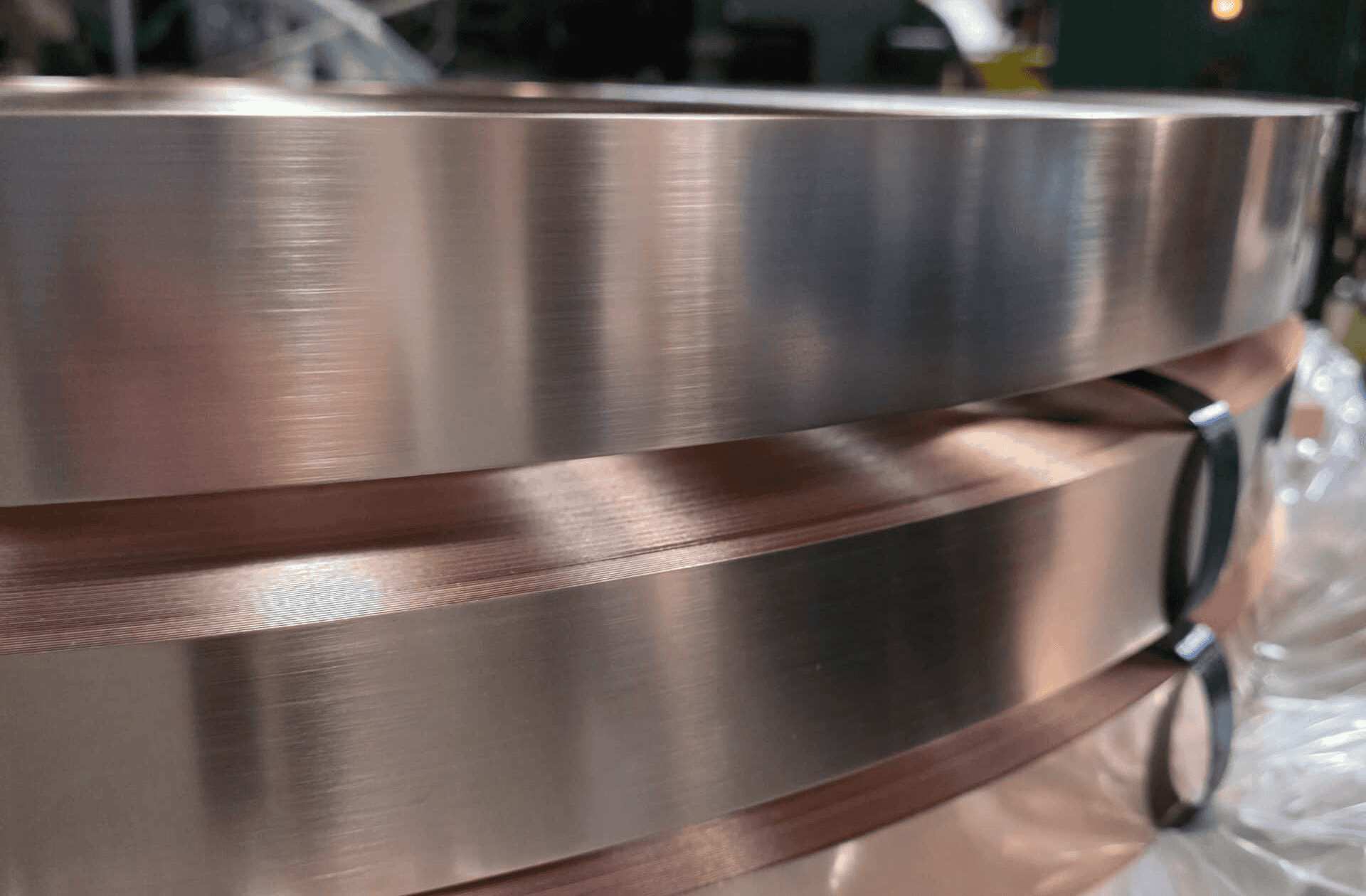
Copper stamping is widely used for parts that require conductivity, corrosion resistance, and formability. Its natural properties make it essential in industries such as automotive, electronics, defense, and industrial equipment.

Different alloy groupings give distinct performance characteristics in stamping applications:
Basic Copper Alloys

Basic Copper Alloys. These primarily include 100-series alloy, including pure copper, and offer the highest conductivity for power distribution. They are ideal for busbars and other high-current-carrying components.

Brass

Brass. Brass combines strength and corrosion resistance, making it useful for stamped electrical contacts, connectors, and industrial components that require durability.

Bronze

Bronze. Bronze offers long-term wear resistance and is often used for conductive stamped parts that must perform reliably in demanding environments. Bronze also has superior spring properties, allowing components to be used as contacts and switch parts.

High-Performance Copper

High-Performance Copper Alloys. These materials offer a balance of higher conductivity and moderate strength, enabling current-carrying components to maintain useful spring properties.

Advantages of Copper

Copper offers several advantages that make it an excellent choice for stamped components:

Electrical Conductivity
Electrical conductivity. Copper provides reliable energy transfer, making it an ideal choice for busbars, terminals, and connectors.
Thermal Conductivity
Thermal conductivity. Copper efficiently manages heat, which makes it suitable for heat sinks and components exposed to thermal cycling.
Corrosion Resistance
Corrosion resistance. Copper withstands exposure to moisture and harsh operating conditions, helping stamped parts maintain long-term reliability in demanding environments.
Malleability
Malleability. Copper can be formed into thin, intricate shapes without cracking, allowing for complex part geometries.
Spring Properties
Spring Properties. Copper’s strength and elasticity allow components to act as springs, clips, and contacts, deforming under stress but returning to their original shape once the stress is removed.

Applications

G&M uses copper and its alloys to manufacture a wide range of precision stamped parts, including:

Automotive
Automotive. Busbars, battery contacts, and connectors that enable efficient energy distribution in vehicles, including EV systems.
Electronics and Electrical
Electronics and Electrical. Used for lead frames, precision contacts, and EMI shielding, copper provides reliable conductivity and signal protection in low-voltage electronics and delivers robust performance in higher-voltage electrical applications.
Defense
Defense. Copper busbars and communication system contacts that provide dependable power transfer in military vehicles and equipment.
Industrial Machinery
Industrial Machinery. Conductive components that help maintain stable electrical systems in heavy-duty machines.
 

Stainless Steel and Carbon Steel

Stainless steel is valued in stamping because it delivers durability, strength, and resistance to corrosion. Grades such as 301, 304, and 316 are often selected when components must withstand stress, moisture, or chemical exposure without degrading.

Carbon steel offers high strength and toughness at a lower cost. It is widely used when corrosion resistance is less critical, but performance and cost efficiency are top priorities. Together, these steels provide versatile options for precision stamping across multiple industries.

Advantages of Stainless Steel and Carbon Steel

Both stainless and carbon steels offer important advantages that make them highly suitable for precision stamping:

Corrosion Resistance
Corrosion resistance. Stainless steel withstands rust and chemical corrosion, while carbon steel can be treated or coated for added protection.
Strength and Toughness
Strength and toughness. Both materials handle vibration, fatigue, and heavy loads, making them reliable for structural and functional components. Some stainless and carbon steel alloys have better spring properties, making them ideal for parts such as clips, snaps, and springs.
Heat Resistance
Heat resistance. Stainless steel maintains mechanical stability at elevated temperatures, while carbon steel offers strong performance in standard operating environments.
Cost-Effectiveness
Cost-effectiveness. Carbon steel provides excellent strength at a lower cost, and stainless steel balances higher material expense with longer service life.

Applications

G&M uses stainless and carbon steels to produce a range of parts across key industries:

Automotive
Automotive. Brackets and shielding components that add strength and durability in vehicles subject to vibration and stress.
Medical
Medical. Sensor components, reusable and single-use devices, and contacts that require corrosion resistance and easy sterilization.
Defense
Defense. Stamped components that withstand demanding environments while protecting sensitive equipment.
Industrial Machinery
Industrial Machinery. Heavy-duty contacts and mounting brackets that deliver long service life under constant use.

Aluminum

Aluminum is valued for its combination of light weight, strength, and corrosion resistance. It supports applications where reducing weight is important without compromising durability or reliability.

Advantages of Aluminum

Aluminum offers important benefits that make it highly suitable for precision stamping:

Lightweight Performance
Lightweight performance. Aluminum reduces overall system weight, which improves efficiency in vehicles, equipment, and devices.
Corrosion Resistance
Corrosion resistance. Aluminum resists degradation in harsh environments, ensuring long-term performance without the need for additional coatings.
Formability
Formability. Aluminum supports both simple and complex part geometries while maintaining strength.
Conductivity
Conductivity. Aluminum delivers reliable thermal and electrical performance at a lower cost than copper.

Applications

G&M uses aluminum to produce precision-stamped parts for industries where weight reduction and corrosion resistance are important:

Automotive
Automotive. Lightweight brackets, shielding, busbars, and battery components that improve efficiency and durability.
Medical
Medical. Stamped parts that support reliable performance in medical devices.
Defense
Defense. Aluminum busbars that provide lightweight yet dependable power distribution in vehicles and equipment.
Industrial Machinery
Industrial Machinery. Lightweight brackets and conductive parts that maintain reliable operation in demanding equipment.
 

Nickel Alloys

Nickel alloys are well-suited for precision stamping when parts must perform in harsh or high-stress conditions. They combine strength, corrosion resistance, and stability at elevated temperatures, which makes them an ideal choice for demanding stamped components.

Advantages of Nickel Alloys

Nickel alloys provide several benefits that make them a valuable choice for custom metal stamping:

High Temperature Strength
High-temperature strength. They maintain mechanical properties when exposed to heat for extended periods.
Corrosion Resistance
Corrosion resistance. They resist degradation from chemicals, acids, and moisture, ensuring long-term reliability.
Fatigue Resistance
Fatigue resistance. They endure vibration and mechanical stress without losing performance.
Weldability
Weldability. This property is particularly important in battery applications, where strong, reliable welds are needed for battery interconnects.

Applications

G&M manufactures nickel alloy stampings that meet rigorous requirements for precision and durability:

Automotive
Automotive. High-strength terminals, connectors, and battery interconnects for advanced vehicle systems.
Medical
Medical. Reusable stamped parts and precision contacts that withstand repeated sterilization.
Electronics. Connectors, batteries, and shielding for high-performance devices.
Defense
Defense. Contacts, busbars, and other critical components that operate reliably in extreme environments.

G&M’s Expert Metal Stamping Services

The success of any metal stamping project depends on selecting the right material and working with a partner who can manage it with precision. G&M has nearly 60 years of experience producing custom parts from copper, stainless steel, carbon steel, aluminum, and nickel alloys.

With in-house tooling, advanced high-speed presses, and strict quality systems, G&M delivers reliable stampings for complex applications. Contact us today to learn more or request a quote for your next project.